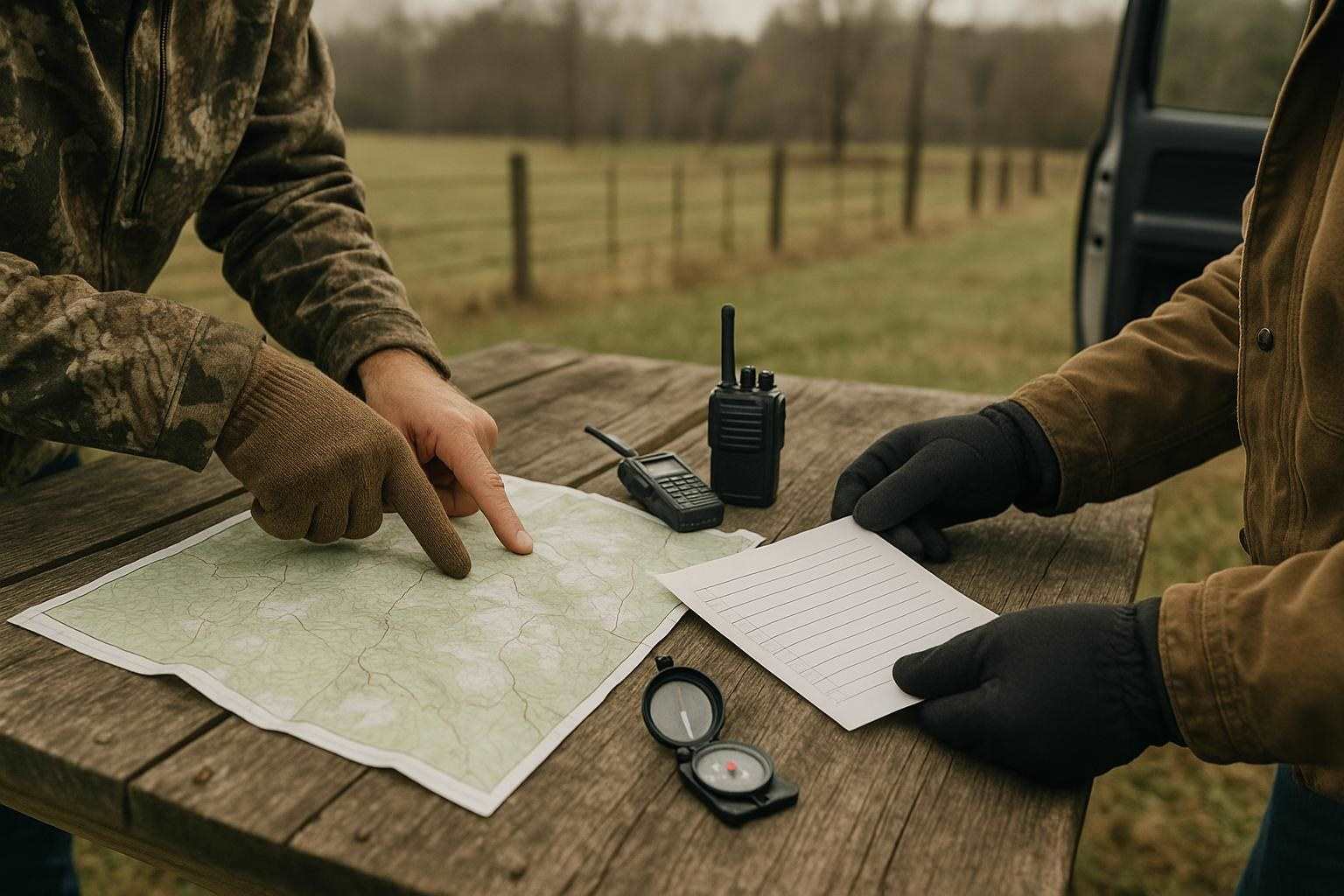
A guided hunt can go wrong before anyone even gets to the field. The arrival time might be unclear. A required permit could have changed.. A rifle setup that worked fine at home might not work all in the new terrain. On land preparation protects people, livestock, habitat and the quality of decisions made under pressure. Responsible hog hunting starts with a conversation and a few deliberate checks. It continues with the discipline to pass on a shot when conditionsre not right.
Set the trip up before you leave
Ask the guide or land manager for information that will affect your packing and arrival. Confirm the meeting location, access instructions, expected walking distance, terrain, weather exposure and whether overnight conditions could change the plan. A map pin is helpful. It should not replace directions, on where to park, whom to contact and what to do if phone service disappears.
Discuss the hunting method in language. Ask whether the hunt will be from a stand, vehicle-accessible position or hunting route. Learn what happens if the property is wet visibility is poor or hog activity is limited. Flexibility may mean certainty about the day. It is safer than forcing a schedule that no longer fits the ground.
Put the questions to the guide
A good pre-hunt briefing should cover more than where to sit. Ask how the guide identifies shooting lanes. Ask how neighboring properties are marked. Find out where livestock or homes may be located. Learn what signal means that everyone should unload or stop moving. If several hunters are present establish who may shoot what sectors are. How a downed animal will be approached.
Tell the guide about your experience and limitations. Include your comfort with ground improvised shooting rests, handling an animal after the shot and navigating in light. Concealing a limitation does not make the trip safer. It removes information the guide needs for decisions.
Agree on a check-in method, emergency contact procedure and meeting point that remains useful if the group separates. A little clarity before the hunt can prevent a problem later.
Verify rules close to the hunt
Hunting regulations are not trip details. Seasons, legal methods, license requirements, property permissions, transportation rules and reporting obligations can change. Rules may differ by location or land classification. Check guidance from Tennessees wildlife authorities. Confirm property- requirements with the guide or landowner before leaving.
Do not rely on a screenshot, a friends memory or a permit from a trip. Save information where it can be reviewed without a signal.. Treat the saved copy as a reference not proof that nothing has changed. Resolve points before traveling. Ask the relevant authority directly.
The same caution applies to firearms and ammunition. Bring equipment that's lawful for the hunt and appropriate to the agreed method. A guide may set rules than the minimum for safety, access or landowner concerns. Those conditions are part of the trip.
Use a short field checklist
Review the checklist the night then check it again at the vehicle:
– license, permits and required harvest documentation
– Written meeting details guide contact and emergency contact
– Firearm, appropriate ammunition, unloaded transport and safe-storage plan
– Eye and hearing protection, first-aid kit, water and weather layers
– Flashlight or headlamp spare power charged phone and offline map
– Knife and gloves for lawful field care if that task is part of the plan
– Orange or other required safety clothing as applicable
– A way to remove personal waste and prevent contamination between properties
The list is not a substitute for instruction. It separates items you can control from conditions you cannot such as wind direction or animal movement.
Make the shot decision before the animal appears
Ethical decisions are easier when boundaries are set in advance. Decide what makes a shot unacceptable: an obstructed target, backdrop poor light excessive distance, unstable footing or an animal near people, buildings, roads or livestock. If you cannot identify the target. What lies beyond it do not shoot.
A guide may reject a position because the angle is wrong or recovery would be doubtful. That is not an opportunity. It is judgment. A clean opportunity allows shot placement, safe firearm control and a reasonable recovery plan. If any part of that chain is missing. Pass.
After a shot follow the guide's instructions than rushing toward the animal. Mark the known location. Note signs. Let the person directing the hunt decide how the search proceeds. Hasty movement can endanger the group disturb evidence and make recovery harder.
Leave the property better than you found it
Conservation ethics are practical. Respect gates, fences, crops, water sources and areas reserved for wildlife. Close what you open. Stay on approved routes. Do not drive across ground to shorten a walk. Preventing erosion and disturbance is part of being a guest.
Hogs can damage habitat. That does not remove the obligation to use judgment. Do not shoot beyond your ability. Do not abandon an animal because recovery is inconvenient. Do not discard carcass material where it creates a sanitation problem. Ask in advance how the property handles recovery, disposal and required reporting.
Before leaving, collect spent cases and personal rubbish. Check the vehicle. Report damaged property or unusual safety concerns. Review regulations and local guidance before each trip, than treating one outing as a permanent template. The best result is not simply bringing home an animal. It is returning with the property respected, the rules. Every decision defensible.