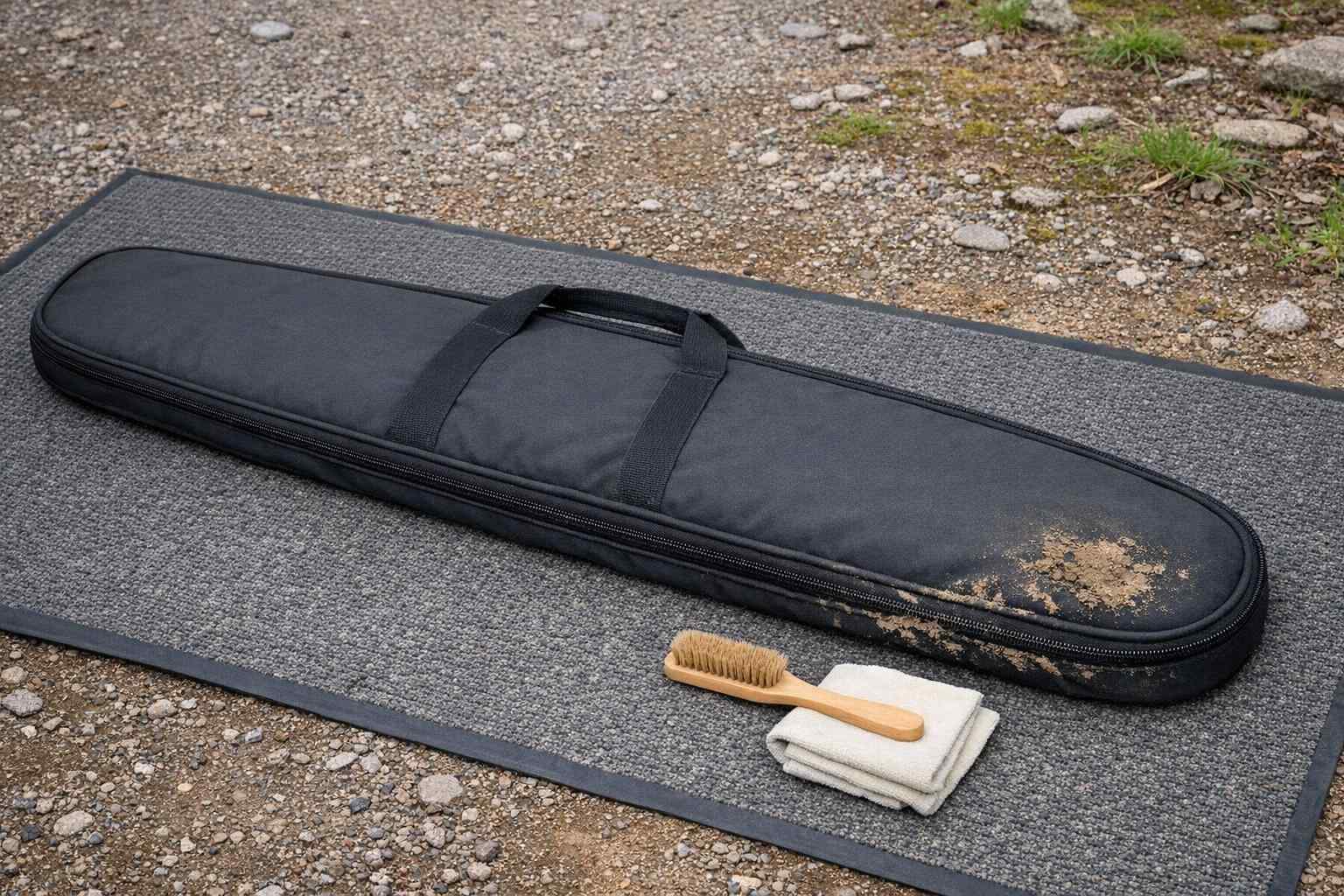
After a long hunting trip on wet ground, soils can look dirtier than they actually are. Dirt and grime need to be cleaned from your rifle case before they get into zippers, seams and pads. And don't mistake cleaning your rifle case for simply making it look clean. You will also want to know where to clean it, what to look for, and when you can put your gear away in storage.
Stop at the right place before the case reaches the house
Stop at the truck and give the case a good cleaning before it is carried into the house. Work on the case in an area that can be cleaned such as on a washable mat or in a contained area away from doors, vehicles, etc. and keep the soil and debris from getting all over the house.
Maintain safe handling of firearms during the process of cleaning your soft rifle case. Follow the rifle and the soft case manufacturer's instructions for cleaning. Keep the rifle pointed in a safe direction at all times during the process of cleaning your soft case. Make sure the firearm is in good working order prior to cleaning the case.
Do not drag a case full of soft guns through mud to save a trip to the house. Even more, do not drag a dirty case through clean gear. This will force more dirt into the fabric of the case than you can imagine. Start to brush out the biggest clumps of dirt from the cleanest part of the case first and work your way to the dirtiest part.
Decide whether the case needs a field rinse or a full wash
For small amounts of dry soil that have fallen onto the case while it is in dry storage, a soft brush and a damp cloth may be all that is required to clean it. Mud, however, requires more attention, especially if it has penetrated to the bottom of the case, into zippers, onto straps and into corners of the case. It is also important to check the manufacturer's care instructions for the case as well as the rifle before using any amount of water for cleaning the case.
Care needs to be taken not to overwater cases when cleaning them. Refilling a bucket of water for rinsing a case could end up soaking the interior of the case and make a job that could have been easy to mess up. In particular avoid getting water to enter any hardware, pockets and closed-up seams etc. Watch the manufacturer's care instructions for any such details.
Note that there are many possible substances that will soil your rifle case – gas, oil, chemics, etc. You must treat these as you would treat any toxic substance. Reference the material-safety information for the product in question and clean up accordingly. It's also important to note that you should not use any cleaning agents to clean your hunting gear. Many of these products will irreparably damage things like fabric, coatings and hardware.
Work the mud out of zippers, seams, and padding
When you open up your case there is more to clean up than just appearance. Mud and grime can get into the zippers, the seams of the case, and into the padding of the case. A soft-bristled brush can help to remove grime and to clean out between the teeth of the zippers. Use a cloth or a cotton swab to clean hard-to-reach areas. Move the zipper slowly to clean the area.
While it is impossible to remove all debris from zippers, etc. before putting your case away for the season it is crucial to stop and inspect for any debris that may have entered in the cleaning process. Also, a little extra time to open up the case and to shake out any loose debris will also pay off in the long run.
Take apart the case's interior sections. Look for any signs of mud or debris in between the padding. If you find any, use a soft brush to remove as much of the debris as possible. Note whether the lining of the case can be removed and washed. If so, do so and clean according to the care of the lining. Otherwise, use a soft brush to remove as much debris as possible from the interior sections.
Dry the case completely before firearm storage
Drying your soft sided rifle case out thoroughly before storing your firearm(s) in the case is VERY important. Moisture can get trapped between the metal parts of your firearm(s) and the inside of the case. Drying the case out completely can prevent smells in the case as well.
Do not store a wet case in your car or closet. High heat will actually further harm items in your soft case such as adhesives, coated materials, foam, and synthetic materials. Simply turn your case every so often to allow ventilation to the inner parts of your soft case.
Before putting your gear away for the season make sure your case has fully dried out. Run your hand through all the sections of your case and look for any signs of dampness, any grit or dirt, any sign of wear to the stitching and any loose threads or loose hardware.
Match the cleanup to the next trip
Your case is part of your entire hog hunting gear. When you're out on a guided hunt, pay attention to how your case got so dirty. Was it because you hunted from a low ground blind? Because you left your gear in an open tailgate? Because your pack leaked? Because you hunted through extremely wet and saturated brush? This will give you good insight on how to pack your gear for your next hunting trip.
For longer trips, a simple maintenance kit can be set up to include a soft brush, absorbent cloths, a small waste bag and any special cleaning solutions that the case manufacturer recommends. This should be stored separately from any ammunition or other items that need to remain dry. It is also worth considering to carry a spare liner and/or a washable ground cover.
Also important to consider during the trip review is the ethical impact of the trip. Debris such as seeds and plant material, as well as soil and even urine can transfer from one property and/or habitat to another on dirty footwear, cases, and gear. Review with the hunters the information given to them regarding the site-specific rules of the landowner and/or guide for cleaning up after themselves.
Know when a dirty case is no longer dependable
Just because your case is dirty doesn't mean it has to be replaced. As long as the case is able to protect your firearm and open/close properly then it is good to continue using it. Replacing a case or repairing it will depend on the extent of the damage. The outside of the case shell, padding, and fasteners should all be inspected for damage. The zipper should also be checked to see if it opens and/or closes properly.
Only make a decision regarding the case after it and your rifle have been fully cleaned, dried and stored in accordance with the respective care instructions. If in doubt regarding signs of moisture or even signs of rust, unusual stains or other deterioration, seek help from the owner's manual or a qualified gunsmith.
Simple matters of convenience can be a conservation problem waiting to happen. By cleaning up quickly and quietly in the field, we keep mud, seeds, and other organic material from being spread to other lands and other habitats. We record what happened on our trip and perhaps plan differently for our next hunting adventure.